


Donblaze sports 
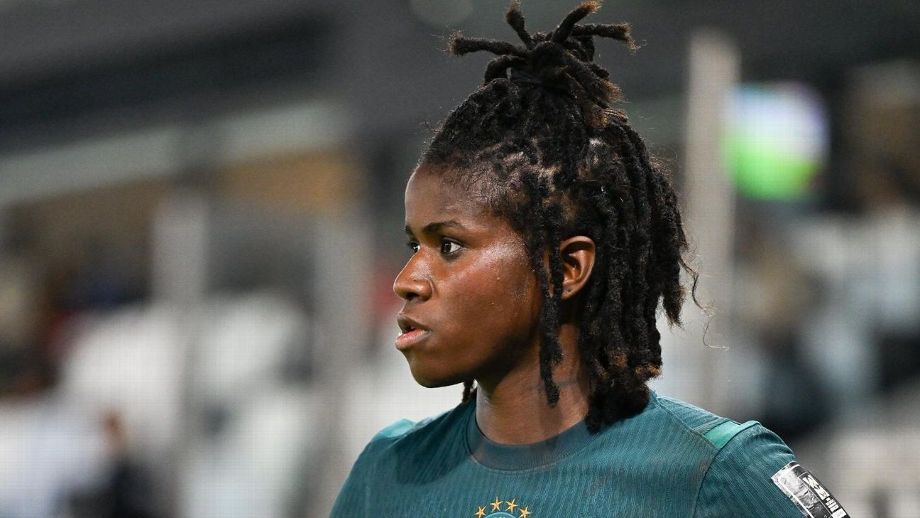
Super Falcons under pressure as Nigeria battles Nambia for WAFCON survival
Nigeria’s Super Falcons face a decisive Women’s Africa Cup of Nations (WAFCON) showdown against Zambia on Saturday, with their title defence hanging in the balance after a shocking opening defeat to Malawi.
The 10-time African champions suffered a painful 3-2 loss in their Group C opener, a result that has placed enormous pressure on coach Justin Madugu and his players ahead of their clash with the dangerous Copper Queens in Casablanca.
Nigeria’s defeat was sealed by the brilliance of the Chawinga sisters. Kansas City Current forward Temwa Chawinga scored twice, while her elder sister Tabitha Chawinga of Lyon added another goal as Malawi stunned the reigning champions.
The result exposed several weaknesses in the Super Falcons’ performance, particularly in midfield and defence, where they struggled to win battles, control possession and deal with Malawi’s pace on counter-attacks.
Now, Nigeria must respond against a Zambia side that arrives with confidence after a commanding 6-0 victory over Egypt.
Leading Zambia’s attack is Orlando Pride forward Barbra Banda, who produced a remarkable four-goal display in their opening match.
The powerful striker has become one of Africa’s most feared attackers, having scored 32 goals and recorded four assists in 21 official tournament appearances for Zambia.
The Copper Queens, coached by Nora Häuptle, will also be motivated by their desire to prove they have closed the gap on Nigeria. Zambia suffered a heavy 5-0 defeat to the Super Falcons in last year’s WAFCON quarter-finals, but their recent progress has established them as one of the continent’s emerging football powers.
For Nigeria, anything less than victory could create an unwanted piece of history — becoming the first Super Falcons team to fail to reach the WAFCON semi-finals.
Madugu seeks tactical solutions
Following the Malawi setback, Madugu admitted that Nigeria must take responsibility for their mistakes and correct them quickly.
“We have done the analysis of what happened in the last game and where we got it all wrong. We have to blame ourselves because we didn’t do certain things right,” the coach said.
One major concern is Nigeria’s defensive approach.
The Super Falcons played with a high defensive line against Malawi, but their aggressive strategy left spaces that were exploited by fast attackers.
Against Zambia’s attacking duo of Banda and Racheal Kundananji, Nigeria cannot afford similar mistakes.
The return of Deborah Abiodun to the midfield could provide the stability Nigeria desperately needs. The Washington Spirit midfielder impressed after coming on against Malawi, using her ability to win tackles, break up play and control possession.
Veteran midfielder Halimatu Ayinde acknowledged that Nigeria lacked discipline in the middle of the park during the opening match.
“We were not disciplined enough position-wise, and that is why we suffered,” Ayinde said, insisting the team has learned from the experience.
Battle for African supremacy
Saturday’s encounter is more than just a group-stage fixture; it represents a battle between two of Africa’s strongest women’s football nations.
Nigeria has dominated the continent for decades, winning the WAFCON title 10 times, while Zambia and South Africa’s recent emergence has demonstrated that African women’s football is becoming increasingly competitive.