





By Chiemeka Ugwowo
Nigeria demands permanent UN Security Council seat
Tinubu’s govt seeks debt relief, fair mineral deals, digital inclusion
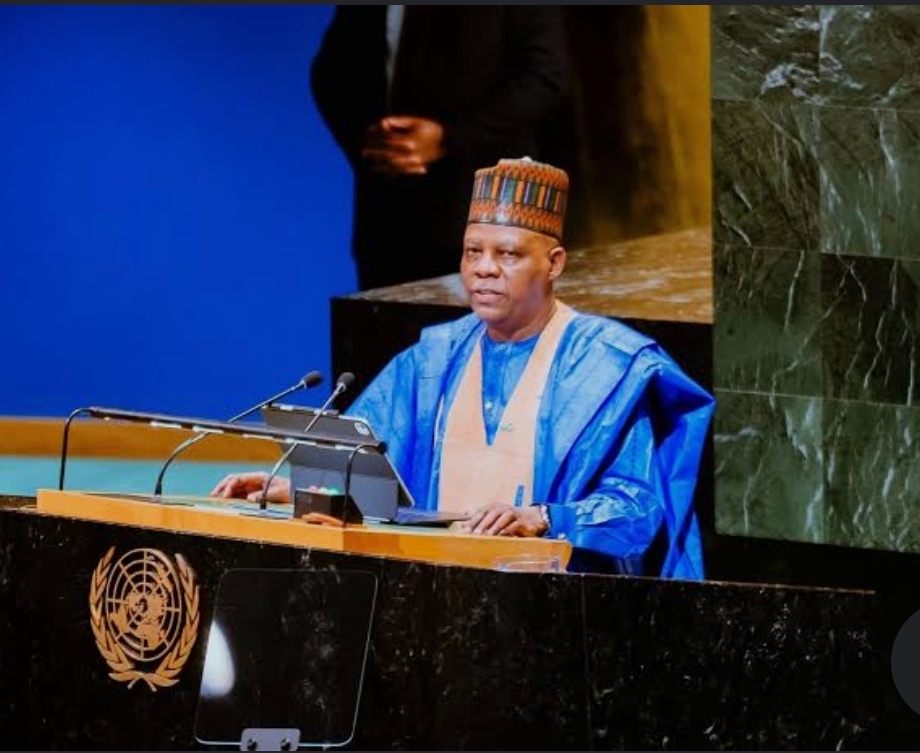
Nigeria has renewed its demand for a permanent seat on the United Nations Security Council, insisting that the global body must reflect the realities of the contemporary world.
The Vice President, who represented President Bola Tinubu at the United Nations General Assembly, made the demand while presenting Nigeria’s position on global peace, development, human rights and multilateral reform.
He argued that Nigeria’s population, strategic importance, regional security role and contribution to international peacekeeping strengthened its case for permanent representation on the Security Council.
The Vice President said Nigeria had participated in 51 of the 60 United Nations peacekeeping operations conducted since its independence in 1960.
He said, “The United Nations will recover its relevance only when it reflects the world as it is, not as it was.”
According to him, Nigeria’s case is based on fairness, representation and the need to restore credibility to the UN system.
He said Nigeria would continue to support the UN Secretary-General’s UN80 initiative and the General Assembly resolution adopted on July 18, 2025, aimed at reforming the UN system for greater efficiency and effectiveness.
The Vice President also called for the elimination of duplication within the UN system, saying the organisation must be able to speak with one voice and respond more effectively to global challenges.
On the global economy, he called for urgent action on sovereign debt relief and improved access to international trade and financing.
He argued that debt relief should not be regarded as charity but as a pathway to sustainable development and global prosperity.
The Vice President proposed the creation of new international mechanisms for managing sovereign debt, saying developing countries should be given greater opportunities to escape dependence on the export of unprocessed commodities.
He also highlighted Nigeria’s economic reforms, including the removal of subsidies and other distortions, while acknowledging the hardship associated with the transition.
The Vice President further called for countries hosting strategic minerals to derive greater benefits from their natural resources.
He said Africa possessed critical minerals required for emerging technologies but had continued to lose value by exporting raw materials without sufficient local processing.
He cited the experiences of Sierra Leone, Sudan and Nigeria’s Niger Delta as examples of the relationship between natural resources, development and conflict.
According to him, greater investment in exploration, local processing and manufacturing would create jobs, diversify global supply chains and promote stability across Africa.
On the Middle East crisis, the Vice President expressed concern over violence against civilians in Gaza, the attack on Qatar and tensions across the region.
He reaffirmed Nigeria’s support for a two-state solution to the Israeli-Palestinian conflict.
He said the international community must uphold the dignity and right to life of civilians, regardless of their nationality or political affiliation.
“We come not as partisans, but as peacemakers,” he said, stressing that Nigeria would continue to pursue peace through multilateral institutions, dialogue and the rule of law.
The Vice President also spoke on Nigeria’s fight against terrorism and violent extremism, saying military operations alone could not provide lasting solutions.
He said military tactics could win battles, but values and ideas were necessary to defeat conflicts that lasted for generations.
He cited Nigeria’s participation in regional security initiatives, including the Multinational Joint Task Force, as part of its commitment to combating violent extremism.
The Vice President described climate change as a security and development issue, rather than merely an environmental concern.
He called for greater use of climate financing to support education, resilient housing, technology and vulnerable communities.
He also advocated an international initiative involving governments, researchers, the private sector and communities to close the digital divide.
He expressed concern over misinformation and declining public trust in information, particularly as artificial intelligence and other technologies increasingly influence governance, finance, security and everyday life.
He said Nigeria supported greater access to technology for developing countries, stressing that artificial intelligence must also mean “Africa Included.”
Concluding the address, the Vice President reaffirmed Nigeria’s commitment to peace, development, unity, multilateralism and human rights.
He said the challenges facing the world required collective action, stressing that “none of us is safe until all of us are safe.”

